Key Takeaways
Minimum water depth is critical for safe HydroHoist operation and varies by model.
Improper use in shallow water can damage lifts, pontoons, and boat hulls.
Adjusting setup and lift positioning can improve performance in low depths.
Understanding clearance and lakebed conditions reduces risk and extends equipment life.
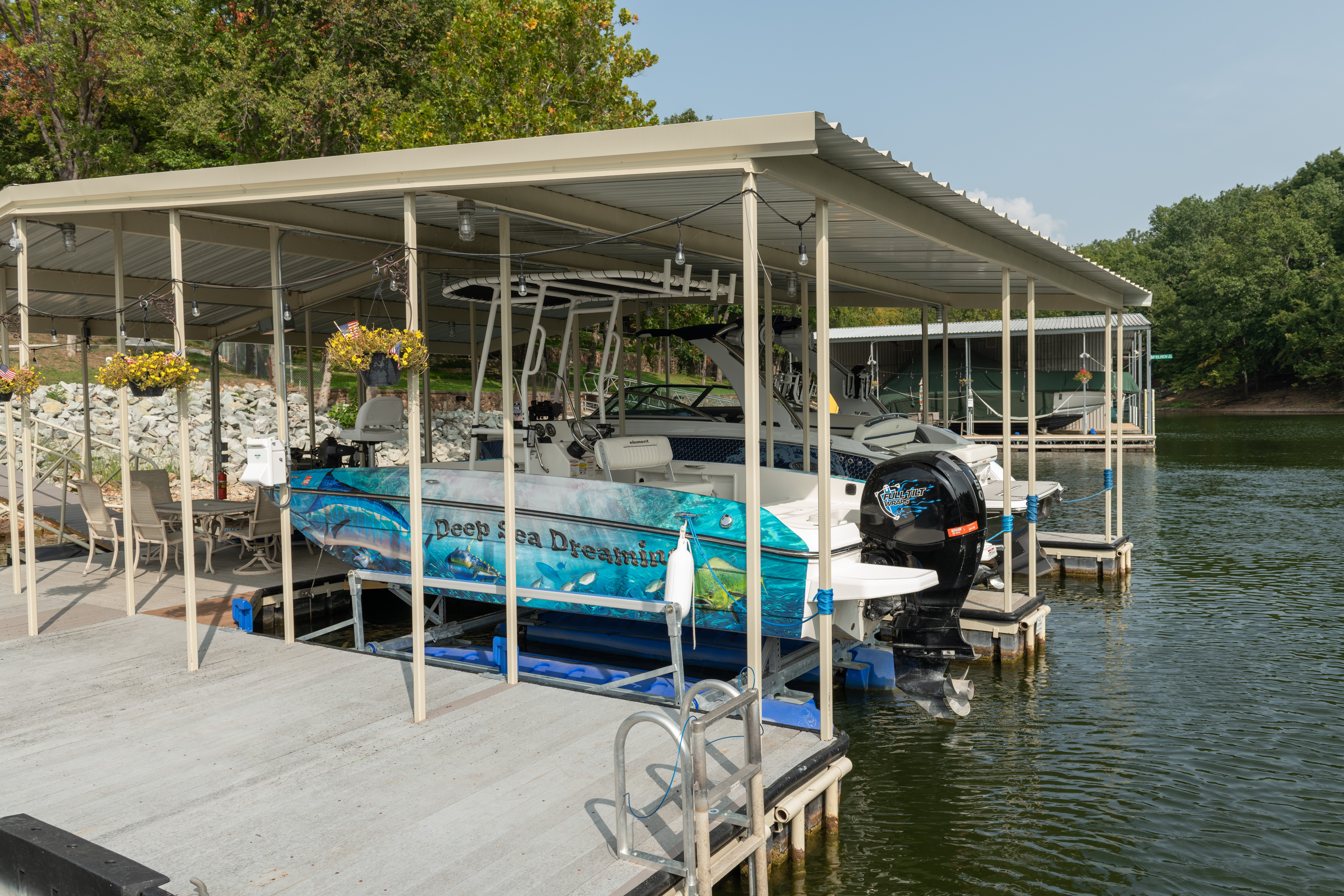
Why Shallow Water Operation Requires Extra Care
Traditional boat lifts typically require 3 to 5 feet of water (plus boat draft) to fully lift and submerge the watercraft without risking contact with the hull or propulsion system. In particularly shallow areas, the lift’s bunks may sit barely submerged or even exposed, making it difficult, unsafe, or downright impossible to load and launch the vessel.
Additionally, many shallow waterfronts feature soft or uneven substrates that can’t reliably support heavier lift structures. When a traditional lift is installed under these conditions, the legs or footplates may sink unevenly into the lakebed, causing the frame to tilt or settle unpredictably.
Over time, this instability can stress the lift’s critical components, shortening its lifespan and potentially leading to sudden failure under load.
Minimum Water Depth Requirements Explained
Minimum water depth refers to the amount of water needed for a boat lift to safely lower the boat, float it into position, and raise it without the hull or propulsion system contacting the bottom. Different boat lift models have varying minimum water depth requirements for safe operation.
For example, HydroHoist UltraLift Shallow Water, which features a low-profile polyethylene tank system, can support vessels up to 9,000 lbs in as little as 22 inches of water (plus boat draft).
To put this in perspective, the average pontoon boat has a draft of 12-16 inches; center consoles and outboards have drafts ranging from 15-18 inches; and V-hull roundabouts often draw 18-24 inches (BoatsGeek, n.d.). This means that for a pontoon with a 14-inch draft, the UltraLift Shallow Water can operate in just under 3 feet of water.
Whereas floating lifts with traditional cylindrical tanks would require deeper water to achieve optimal lifting balance and stability, the wider, flatter profile of the UltraLift’s flotation tanks allows it to operate in shallow environments while distributing buoyancy across a wider surface area.
Factors That Affect Lift Performance in Low Water
It’s important to note that water depth alone does not determine whether a boat lift will operate safely. Other factors to consider include:
Bottom Composition: Soft mud, muck, or shifting sand causes lift legs to sink unevenly under weight. Meanwhile, rocky bottoms or uneven lakebeds may create balance issues, leading to uneven lifting or increased stress on lift components.
Water Level Fluctuations: Lakes and reservoirs can change significantly throughout the year due to drought conditions, dam-controlled drawdowns, tides, or rainfall (Journal of Geophysical Research, 2024). A lift that works in early spring may not have enough clearance come late summer.
Hull Draft and Configuration: Deep-V hulls, heavy inboard engines, rudders, and wakeboard ballast tanks require significantly more water to float free than flat-bottom pontoon boats. Even if the lift itself can technically operate in shallow water, the boat’s hull shape and propulsion system may still require more clearance than expected.
Because these variables can dramatically affect operation, we always recommend scheduling a site assessment with an authorized boat lift dealer to ensure the lift operates as intended in your specific waterfront conditions.
Setup Tips for Shallow Water Conditions
Installing a lift in shallow water requires more precise planning because the operating margin is much smaller than in deeper slips.
Below are some essential tips to help you avoid common pitfalls:
Measure the Historical Low Point: One of the most common mistakes is measuring depth when water levels are temporarily high due to rain or seasonal surges. Always measure based on the historical low-water mark. If you’re new to the water system, ask neighbors or check local water authority logs for the lowest depth recorded in the last five years.
Account for the Silt Factor: Shallow slips often accumulate silt, mud, or organic debris that gradually reduce effective depth. To ensure reliable lift operation, factor in at least several inches of “silt margin” when calculating minimum depth, and plan for periodic dredging or cleaning if your waterfront is prone to heavy sedimentation.
Calculate True Usable Slip Width: A slip width of 10 feet does not mean you have 10 feet of usable space. Dock bumpers, guide posts, and mounting brackets all reduce the effective width of the slip. We recommend leaving 12 to 24 inches on either side of the boat’s beam to mitigate accidental contact with the dock structure and allow for easier maneuvering in crosswinds or currents.
Finally, make sure the lift is compatible with your dock type, as some systems may require specific dock and anchorage modifications to secure them properly. This may involve adding hardware and reinforcement, such as brackets and pilings, to increase stability and support.
Signs Your Lift Is Not Operating Safely
Even properly configured HydroHoist boat lifts for shallow water can experience operational issues over time as water levels shift, lakebeds change, or components experience wear.
Uneven Lifting: If one side or corner of the lift rises faster than the rest, a flotation tank is likely resting on the lakebed, affecting proper balance and air distribution. Check for obstructions or uneven silt accumulation beneath the low side to restore proper clearance before continuing operation.
Unusual Noises: Grinding, scraping, or excessive creaking noises can indicate that parts of the lift are contacting the bottom or that components are under strain during operation. If anything sounds off, stop operation immediately and inspect the lift for bottom contact, loose hardware, or signs of component stress before further use.
Jerky or Slow Operation: A lift that raises unevenly, hesitates, or operates more slowly than normal may be struggling with insufficient water depth or increased resistance from soft mud or debris buildup. Inspect the area around the tanks for mud entrapment and ensure your air lines are clear and fully functioning.
Addressing small performance issues early can help HydroHoist UltraLift Shallow Water owners avoid prolonged downtime, prevent unnecessary strain on lift components, and reduce the likelihood of more costly repairs later.
When to Consider Alternatives or Adjustments
In some shallow water situations, small adjustments may improve lift performance without requiring a complete system replacement. Repositioning the lift slightly farther from shore, adjusting the dock legs, or reconfiguring the docking alignment may provide enough additional clearance for safer operation.
However, certain waterfront conditions may require a different lift setup altogether. Extremely soft bottoms, severe seasonal drawdowns, or unusually deep-draft boats can push standard lift configurations beyond their practical operating limits. In these situations, a shallow-water-specific system may provide a safer, more reliable long-term solution.
Enter your zip code in the dealer locator tool below to get a list of authorized HydroHoist dealers near you. They can conduct a site assessment to determine the best configuration for your waterfront conditions, boat size, and unique environmental fluctuations.
FAQs
What is the minimum water depth for a HydroHoist lift?
The minimum water depth required to safely operate a HydroHoist lift depends on the specific model and the boat’s draft. The HydroHoist UltraLift Shallow Water, for example, can support vessels up to 9,000 lbs in as little as 22 inches of water (plus boat draft). This means that for a pontoon with a 14-inch draft, the UltraLift Shallow Water can operate in just under 3 feet of water.
Can I use a boat lift in shallow water?
Yes, you can use a boat lift in shallow water. However, the lift must be designed and configured specifically for shallow water operation. Traditional boat lifts often require at least 3 to 5 feet of water (plus boat draft) to safely load and launch vessels without contacting the bottom.
In particularly shallow areas, the lift’s bunks may sit barely submerged or even exposed, making it difficult, unsafe, or downright impossible to load and launch the vessel.
What happens if a lift hits the bottom?
If the lift hits the bottom before the bunk boards submerge enough to float the boat, loading and launching the vessel can be difficult, unsafe, or even impossible. Meanwhile, repeatedly hitting the bottom can cause punctures, cracks, or air leaks in the flotation tanks, causing the lift to sit unevenly or, worse, sink.
How do I measure water depth for a boat lift?
The most reliable method is to use a marked pole or measuring stick to check depth at multiple points throughout the slip. Measurements should always be taken during the lowest expected seasonal water levels rather than during temporary high-water conditions. It’s also important to determine whether the bottom is firm or soft, since mud and silt can reduce effective operating depth.
Does water depth change lift performance?
Yes, water depth directly affects how safely and efficiently a lift operates. Insufficient depth can create uneven lifting conditions and make it harder for the boat to float on and off the lift.
References:
BoatsGeek (n.d.). The Minimum Water Depth for Different Types of Boats, https://boatsgeek.com/minimum-water-depth-for-boats/
Journal of Geophysical Research: Biogeosciences, Lewis, A.S.L., Breef‐Pilz, A., Howard,D.W., Lofton, M. E., Olsson, F., Wander, H.L., et al. (2024). Reservoir Drawdown Highlights the Emergent Effects of Water Level Change on Reservoir Physics, Chemistry, and Biology, https://agupubs.onlinelibrary.wiley.com/doi/pdf/10.1029/2023JG007780


