Key Takeaways
This guide helps you assess whether your dock and slip are ready for a shallow water boat lift before calling a dealer.
Learn exactly how to measure water depth at low pool/low tide, plus what “mud line” means for lift fit.
You’ll leave with a printable site assessment checklist: slip width, dock height, approach angle, and bottom type.
If your site is tight or shallow, the UltraLift Shallow Water style is designed for low-depth waterfronts.
The final section tells you when to stop measuring and call a boat lift dealer near me for a site visit.
Quick Answer: How Do I Know If My Site Is Ready for a Shallow Water Lift?
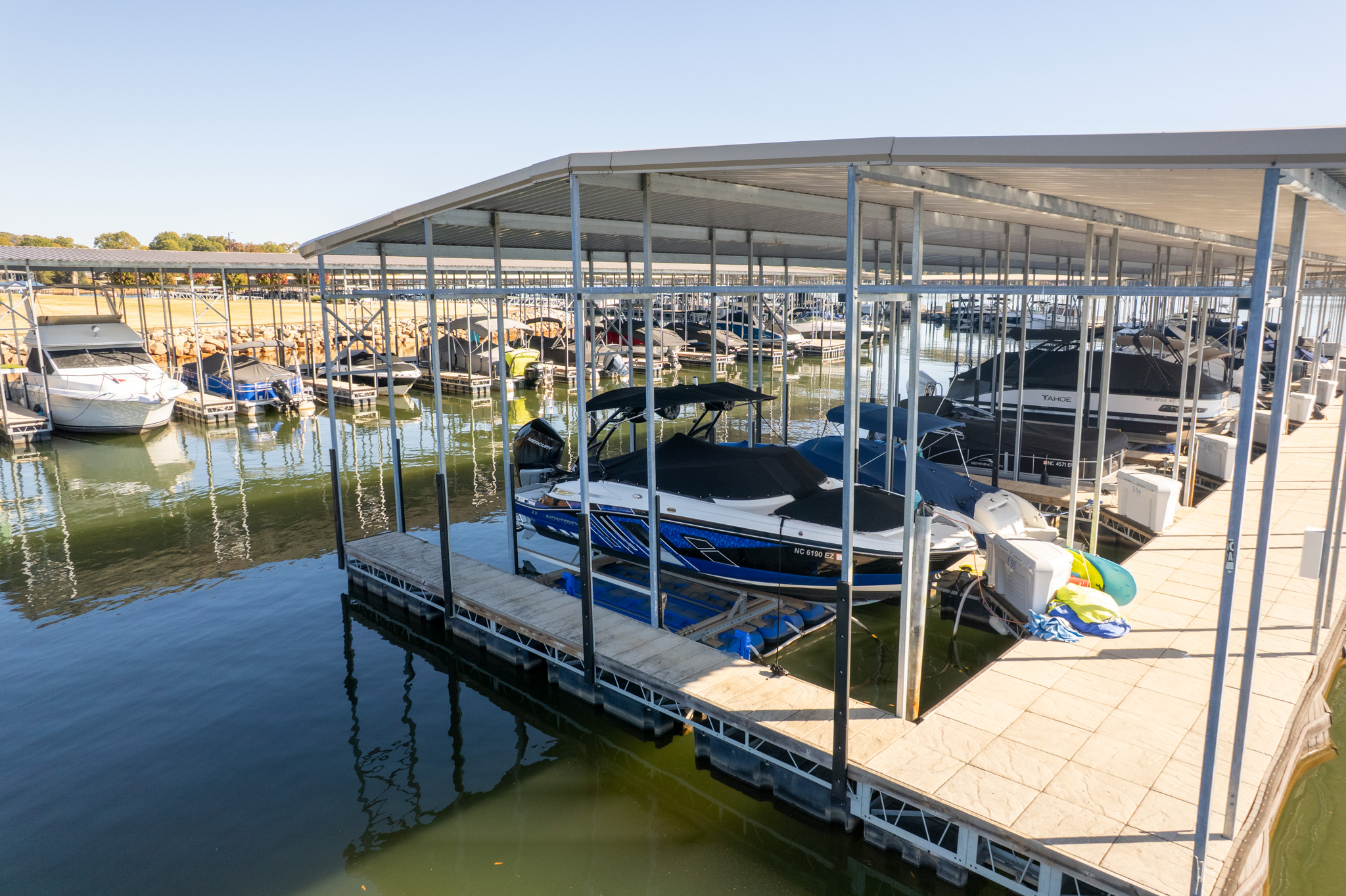
Shallow water boat lifts are specifically designed for slips that sit in less than five feet of water and those with height restrictions, providing a lifting solution for environments (shallow water or low overhead clearance) where traditional hoists won’t work.
The 60-second readiness test
Water Depth: Measure your water at its lowest point of the year (or at low-tide depth) using a marked pole. If it ever dips below five feet, a shallow water boat lift is worth considering. These models can safely operate in as little as three feet of water (22 inches + draft).
Slip Height: If your dock has overhead limits (such as double-decker slips or those with low rooflines), shallow water boat lifts can give you up to 12 inches of extra clearance.
Bottom: Probe the bottom by pushing a pole. Soft mud reduces effective depth by 6-12 inches.
When a shallow water model makes sense
Canals and Man-Made Channels: Canals are notorious for silting up over time. A lift that requires five to six feet of depth might become unusable after a few years of sediment buildup. A shallow water model future-proofs your investment against inevitable silting.
Protected Coves: While coves offer great protection from wind and waves, they often have gradual, sloping bottoms rather than steep drop-offs. If you have to push your dock further and further out just to find deep water, a shallow water lift can allow you to keep your slip closer to shore.
Receding Shorelines & Drought-Prone Lakes: Water levels can fluctuate wildly in lakes or reservoirs subject to seasonal drawdowns or drought conditions, potentially leaving boats stranded on lifts (Journal of Geophysical Research, 2024). A shallow water lift maximizes your “usable season," keeping you on the water even when the lake level drops.
Site Assessment Checklist
Installing a shallow water lift requires precise measurements because the margin for error is much smaller than in deep water. Use the sections below to build your site profile. This information will be useful when you visit an authorized boat lift dealer near me.
Tools you’ll need
Measuring Tape (At least 25 feet)
Marked Pole or PVC Pipe (Much more accurate than a weighted line, as lines can drift in the current)
Notepad or Phone (To record numbers and sketch a quick diagram)
Helping Hand (Measuring is easier and more accurate with two people)
Checklist 1: Measure water depth the right way
Measure at low pool/low tide
Always measure at the lowest seasonal water level. This ensures your lift will function even during droughts or drawdowns. If you aren't sure of the annual variance, ask your neighbors or check local historical water data.
How to map depth across the slip
Divide the slip into a 3x3 grid, measuring each point and noting the average minimum depth across the grid. If there are any significant slopes (a difference of more than six inches between grids), note this down.
Record depth + boat draft
You can use the simple formula as a reference point:
Average Depth – Boat Draft = Remaining Clearance
For example, if your low-water depth is 48 inches and your boat draft is 20 inches, you have 28 inches of clearance.
Checklist 2: Slip + dock measurements
Slip width and clearance
Measure the internal width of the slip from finger pier to finger pier. Factor in any accessories or obstructions encroaching on that width and ensure you have at least 12 inches of clearance on either side of the boat’s beam to accommodate guide poles and bumpers.
For reference, a 6,000-lb capacity HydroHoist shallow water boat lift requires a minimum slip width of 9′-9″ (9′-4″ with low profile dock brackets). Meanwhile, the 9,000-lb model requires a minimum slip width of 13′-6″ (13′-1″ with low-profile dock brackets).
Dock height & freeboard
Measure the distance from the dock decking to the water surface. This determines the required tank profile to ensure the lift lowers deep enough for the boat to float off.
Approach path (turn radius, current, wind, wave exposure)
Note turn radius, current, wind, and wave exposure. These influence how easily you can enter and exit the slip.
Checklist 3: Bottom type: “mud line” vs. hard bottom
What the mud line is (and how to test it)
You need to distinguish between the "false bottom" (the top layer of silt) and the "hard bottom" (where the ground is solid), as the depth where the firm bottom begins is your true operating depth.
Take your PVC pole and lower it until it touches the bottom and mark the waterline. Then, push down hard with your body weight. If the pole slides down another 6-12 inches before hitting a hard stop, you have a soft bottom. If the pole hits a hard stop immediately (either rocks or hard clay), you have a hard bottom, and your water depth measurements must be more precise.
Why soft bottoms change your effective depth
An installation site with soft terrain is often more forgiving for shallow water boat lifts. HydroHoist’s polyethylene tanks can rest on soft bottoms if necessary. This means that if you have 12 inches of soft silt, the lift tanks can nestle into that mud, effectively giving you an extra foot of navigable water depth for your boat—something that rocky bottoms don’t afford.
Checklist 4: Shoreline + dock structure
Attachment points, structural condition, and safe access
A lift is only as secure as the structure it’s attached to. Inspect the dock’s frameboards, pilings, brackets, and walkways for signs of wear, rot, or corrosion and reinforce or replace accordingly.
You will need space on the dock (typically near the front of the slip) to mount the HydroHoist control unit. Ensure you have a spot that is easily accessible for operation but doesn't create tripping hazards. As well, check that your shore power connection is within reach and equipped with a Ground Fault Circuit Interrupter (GFCI) for safety. If your dock doesn't have power, you may need to factor in the cost of running a line or installing a solar charging setup.
To get a better idea of whether a shallow water lift can work for your waterfront, check out our repository of boat lift installation instructions.
Shallow Water Lift Fit: What UltraLift Shallow Water Is Designed For
The HydroHoist UltraLift Shallow Water features a low-profile polyethylene tank system that can support vessels up to 9,000 lbs in as little as 22 inches of water (plus boat draft). Whereas traditional cylindrical tanks would require deeper water to achieve optimal lifting balance and stability, the wider, flatter profile of the UltraLift’s flotation tanks allows it to operate in shallow environments while distributing buoyancy across a wider surface area.
The shallow-water problem this lift solves
Traditional boat lifts typically require three to five feet of water (plus boat draft) to fully submerge and lift the watercraft without risking contact with the hull or propulsion system. In particularly shallow areas, the lift’s bunks may sit barely submerged or even exposed, making it difficult, unsafe, or downright impossible to load and launch the vessel.
Additionally, many shallow waterfronts feature soft or uneven substrates that can’t reliably support heavier lift structures. In sites where installing a traditional boat lift support structure isn’t feasible, premium floating lifts like the UltraLift provide a versatile solution.
Minimum depth guidance
The UltraLift can operate in a minimum water depth of 22 inches (plus draft). To put this in perspective, the average pontoon boat has a draft of 12-16 inches; center consoles and outboards have drafts ranging from 15-18 inches; and V-hull roundabouts often draw 18-24 inches.
Always measure draft with the boat fully loaded (fuel, gear, and other usual equipment), as loads can push the hull 1–2 inches deeper.
Common use cases
Despite its low profile, the UltraLift Shallow Water boat lift doesn’t compromise on strength. With tank configurations rated to lift boats up to 9,000 pounds and 28 feet in length, it’s ideal for a wide range of vessels—from fishing boats and runabouts to pontoons with tall wake towers. Its low-clearance design also makes it an innovative solution for covered docks and marinas with low roof clearance.
Common Measurement Mistakes That Cause Bad Quotes or Re-Installs
Measuring on a “good day” instead of low water
One of the most common mistakes dealers see is waterfront property owners measuring depth when water levels are temporarily high due to rain, seasonal surges, or tides. Always measure based on the historical low-water mark. If you are new to the lake, ask neighbors or check local water authority logs for the lowest depth recorded in the last five years.
Ignoring mud line / soft bottom compression
Failing to determine whether your depth includes soft silt can skew measurements. Understanding where the hard bottom begins helps dealers correctly assess the required tank configuration and operating clearance.
Not accounting for bumpers, guides, or centering needs
A slip width of 10 feet does not mean you have 10 feet of usable space. Dock bumpers, guide posts, and mounting brackets all reduce the effective width of the slip. Failing to account for these clearance needs can make docking stressful or may require re-configuring the lift after installation.
We recommend giving 12-24 inches of wiggle room for safe navigation, especially when conditions are less than ideal.
When to Call a Dealer (and What to Send Them)
DIY measurements are helpful reference points. However, we always recommend a site assessment by an authorized dealer to ensure the shallow water boat lift will work as intended.
The “send this to your dealer” checklist
Photos of the slip from multiple angles (front, sides, and overhead if possible)
Your 3x3 depth grid measurements taken at low water
Dock height/freeboard measurement
Slip width and noted obstructions
Bottom type notes (soft mud vs. hard bottom, estimated mud depth)
Boat details (length, beam, weight, and fully loaded draft)
What happens during a site visit
During a site assessment, authorized HydroHoist dealers will verify your measurements, confirm bottom conditions, and evaluate the dock structure and attachment points. They’ll recommend the appropriate lift model and tank configuration, flag any installation challenges, and plan other system requirements, such as access, power, and anchoring.
Enter your zip code in the dealer locator tool below to get a list of authorized HydroHoist dealers in your area and explore the different types of boat lifts for unique installation sites.
FAQs
Where can I find a guide to assess if my site is ready for a shallow water boat lift?
You can schedule a site assessment with authorized HydroHoist partners. Enter your zip code in the dealer locator tool below. This will give you a list of HydroHoist dealers near you, their contact information, and driving directions.
How much clearance do I need for a shallow water lift in my slip?
For UltraLift Shallow Water models with a capacity up to 6,000 lbs, you will need a minimum of 9′9″ (9′4″ with low profile dock brackets); 11 feet (10’7” with low profile dock brackets) a 7,500-lb capacity lift; and 13’6” (13’1” with low profile dock brackets) for a 9,000-lb capacity shallow water lift.
When should I stop DIY measuring and call a boat lift dealer near me?
While DIY measurements are helpful reference points, you will eventually need to schedule a site assessment to confirm and finalize the optimal boat lift configuration.
References:
Journal of Geophysical Research: Biogeosciences, Lewis, A.S.L., Breef‐Pilz, A., Howard,D.W., Lofton, M. E., Olsson, F., Wander, H.L., et al. (2024). Reservoir Drawdown Highlights the Emergent Effects of Water Level Change on Reservoir Physics, Chemistry, and Biology

