Key Takeaways
A proper de-winterization prevents early-season lift failures
Loose connections are the most common spring issue
Testing systems before launch saves time and service calls
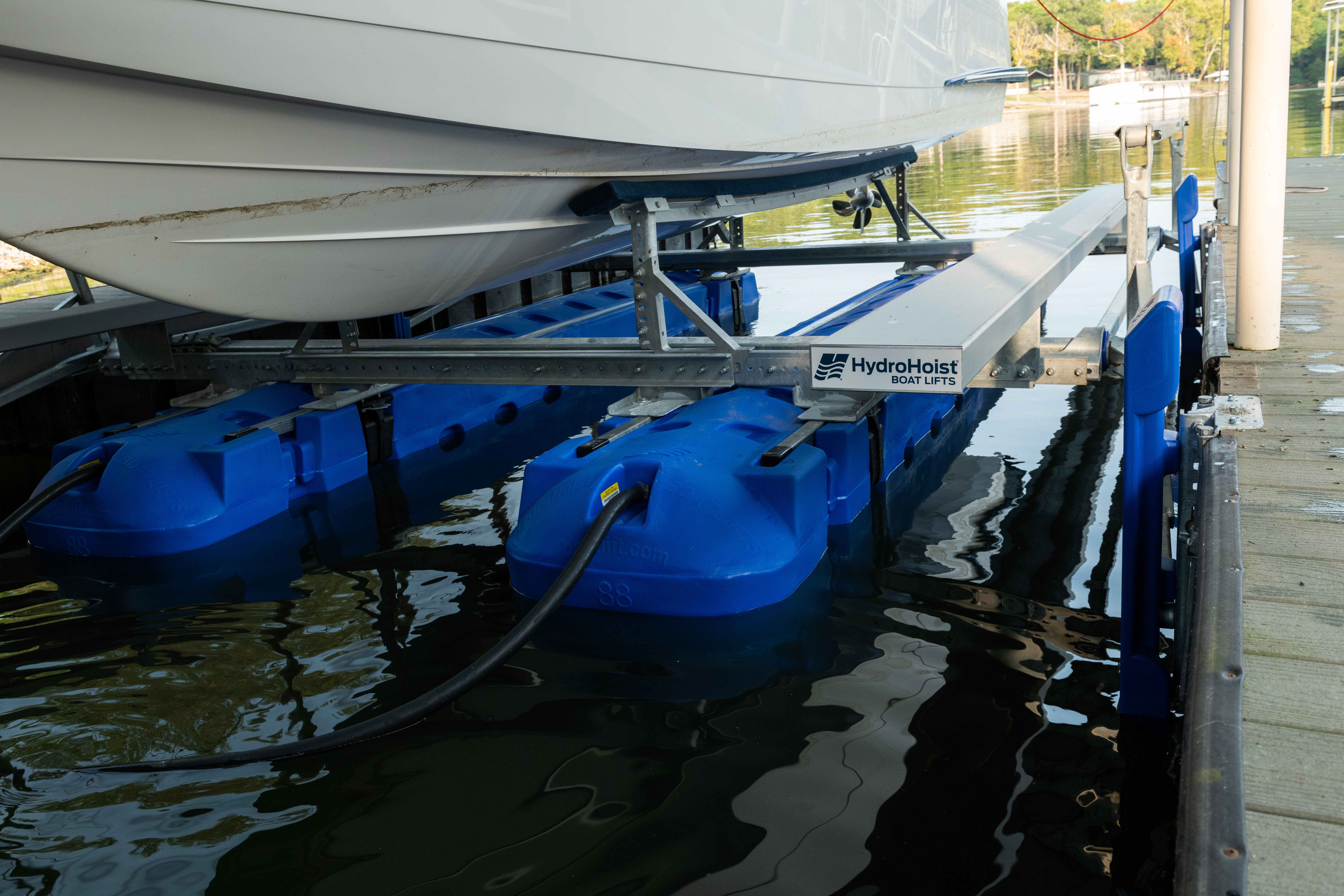
Why De-Winterizing Your HydroHoist Matters
Winter can be unkind to mechanical systems sitting in the water. Moisture trapped in control valves or hoses can freeze and expand. This often leads to hairline cracks in plastic fittings or hoses that are unnoticeable until you apply pressure in the spring.
Even in milder climates, temperature swings can cause fittings and hose clamps to contract and loosen over time (HCL Clamping, n.d.). Even a slight shift can create minor air leaks once you power the system back on. Temperature fluctuations can also cause moisture to build up in air tanks and blower cabinets, which can accelerate corrosion or trigger electrical shorts if not cleared (Tools Guide, n.d.).
The good news? A careful round of boat lift spring prep is typically all it takes to help catch potential issues before they turn into mid-season interruptions. By making de-winterizing an essential part of your HydroHoist maintenance, you’re setting yourself up for a seamless, stress-free boating season.
Step 1: Inspect the Lift Before Reconnecting Anything
Before re-attaching hoses or powering up the blower, give your HydroHoist boat lift a thorough walkaround.
Check for visible damage or shifting: Walk the perimeter of the lift and look for anything out of alignment, such as bent arms, uneven tanks, or signs the frame has shifted under ice pressure.
Inspect bolt assemblies and frame connections: Cold weather can loosen hardware. Make sure bolts, nuts, and brackets are snug and free of corrosion.
Look for cracked hoses or fittings: Freezing water often leaves behind hairline fractures in plastic or rubber parts. Even small cracks can turn into leaks once the system is under pressure.
Starting with a careful boat lift inspection ensures you’re not reconnecting compromised parts.
Step 2: Reconnect and Secure Air Lines
Reattach all air lines to the tank and blower. Make sure each hose is fully seated on its fitting before tightening. A hose that’s even slightly off-center can create uneven airflow or stress the fitting once the system is under pressure.
Then, snug each hose clamp securely without overtightening. This is especially important after cold-weather storage. Most early‑season service calls come down to clamps that slipped just enough to cause leaks.
If you’re unsure about how to reconnect and secure air lines, consult your boat lift installation instructions.
Step 3: Check the Control Box and Electrical Components
With power still disconnected, inspect the control box and visible wiring assemblies. Look for corrosion, frayed wires, loose terminals, or any discoloration that suggests moisture intrusion.
If you spot any of these issues, don’t ignore them—replace damaged wires or fittings before reconnecting power, and clean corroded terminals with a contact‑safe electrical cleaner. Severe damage or persistent discoloration is best handled by a qualified technician to ensure safe operation.
After ensuring the wiring and terminals are sound, reconnect the power and confirm the control box powers on correctly. A smooth startup indicates the system is ready, while hesitation or flickering lights may signal deeper issues. Test each control to verify responsiveness. Toggle switches should feel firm, and indicator lights should illuminate without delay.
Step 4: Test the Blower System
Before placing your boat on the lift, run the blower system briefly.
Listen carefully. The HydroHoist blower should operate smoothly without excessive vibration or unusual noise. A steady, consistent sound is what you want to hear.
As the tanks fill and release air and water, watch for smooth, even movement. If you hear hissing or notice a delayed response, recheck hose connections and clamps.
Step 5: Perform a Controlled Test Lift
Once the blower test is complete, perform a controlled test cycle without your boat.
Raise and lower the lift fully. The platform should rise evenly and respond promptly to controls. Watch for any uneven movement or delayed response. The frame should rise and lower without hesitation or tilt.
If you hear hissing or notice the lift struggling to hold position, pause and secure clamps or fittings before continuing. In many cases, this simple adjustment resolves the issue completely.
When to Call a Dealer for Service
Most spring startup issues are usually minor and easily resolved with basic boat lift maintenance tips. However, some situations warrant professional support.
Contact your authorized HydroHoist dealer if you notice:
Persistent air leaks after tightening clamps
Electrical issues that prevent proper power-up
Blower failure or abnormal operation
Bent frames, cracked tanks, or severe corrosion
Your dealer can diagnose and address more complex concerns more efficiently, ensuring your lift is safe and ready for the water.
Looking for an authorized HydroHoist dealer near you? Enter your zip code in the dealer locator tool below. This will give you a list of HydroHoist partners in your area along with their contact information and driving directions.
FAQs
Why do hose clamps loosen over winter?
Temperature fluctuations cause metal hose clamps and rubber air lines to expand and contract at different rates. Over several months of cold weather, that subtle contraction can slightly reduce clamp tension. When you power up in spring, those small gaps can allow minor air leaks.
Should I test my HydroHoist before putting the boat on it?
Yes. Always run a no-load test cycle before placing your boat on the lift. Briefly operating the system allows you to confirm smooth inflation, proper blower function, and even lift movement. Testing first reduces the risk of mid-cycle adjustments with your boat already onboard.
What if my lift doesn’t rise evenly after winter?
Uneven lifting usually points to air distribution problems, loose fittings, or tank misalignment. Pause the test, check clamps and hoses for leaks, and inspect the frame for shifting. If the problem persists, it’s best to call a dealer to prevent further damage.
Can I de-winterize my HydroHoist myself?
Most boat owners can handle basic de‑winterizing steps like inspections, tightening clamps, and testing the blower system. However, if you discover electrical issues, persistent leaks, or structural damage, we recommend professional service to ensure safe operation.
References:
HCL Clamping USA (n.d.). Temperature Range, https://hcl-clamping.com/blogs/glossary/temperature-range
Tools Guide (n.d.). How to Keep Moisture Out of Air Compressor Tank: Tips and Tricks, https://toolsguide.org/how-to-keep-moisture-out-of-air-compressor-tank/

